
The Accessories That Actually Matter for a Sauna Heater for Small Spaces

Out of the long list of sauna add-ons sold alongside heaters, four actually matter for a small-space setup: a guard rail for safety and clearance compliance, a bucket and ladle for traditional steam, replacement stones since the included set wears out, and a timer if the heater does not already have one built in. Everything past those four is optional polish rather than something that changes how the sauna actually functions.
Why is a guard rail the one non-negotiable accessory?
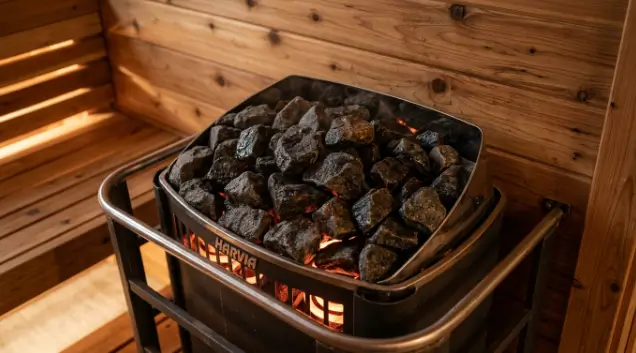
A guard rail, sometimes sold as a heater fence, sits around the heater to prevent accidental contact with the hot surface and is frequently part of meeting clearance-to-combustibles requirements near benches or walls in a small room. In a genuinely tight cabin, where the heater sits closer to seating than in a larger room by necessity, a guard rail is not a nice-to-have. Most package deals include one sized to the specific heater, but if you are buying a heater separately from a cabin kit, confirming a compatible guard rail is included or available should happen before checkout, not after installation.
Do the stones that come with a heater need to be replaced?
Eventually, yes, even though most package heaters ship with an initial set already included. Stones crack and crumble from repeated thermal shock, the stress of going from room temperature to over 500 degrees Fahrenheit and back, especially with water regularly ladled onto them. A reasonable check interval is every 6 to 12 months depending on how often the heater runs, with cracked or visibly degraded stones pulled and replaced rather than left in the stack. Stone type matters too: dense volcanic stones like peridotite hold heat longer and crack less often than softer, more porous rock, which is why manufacturer-recommended stones tend to outlast generic substitutes.
Is a bucket and ladle actually necessary, or just traditional?
For anyone who wants the traditional loyly experience, steam produced by ladling water onto hot stones, a bucket and ladle set is functionally necessary rather than decorative. It is one of the only accessories on this list that changes the actual session rather than just supporting safety or maintenance. A basic wood or stainless bucket and ladle set is inexpensive and holds up fine in a small cabin’s heat and humidity, so there is little reason to skip it if steam sessions are part of the plan.
Does a small heater need a timer, and does it matter which kind?
Some package heaters include a built-in digital timer as part of the controller, while others are basic on-off units that need an add-on timer accessory for the same function. A timer matters more than it might seem for a small space specifically, since a small, well-insulated cabin holds heat efficiently and it is easy to lose track of time in a session that feels shorter than it actually is. An automatic shutoff after a set duration is a simple safety upgrade that also saves on electricity if a session runs longer than intended without anyone checking a clock.
What about a thermometer, hygrometer, or backrest?
These fall into the useful-but-optional category. A combined thermometer and hygrometer, usually a small analog dial mounted on the wall, helps a new owner learn what temperature and humidity range they actually prefer rather than guessing each session, and it is cheap enough that there is little downside to adding one. A backrest or additional bench cushion improves comfort on longer sessions but has no functional role in how the heater performs. These are worth adding for comfort and convenience, but skipping them does not compromise safety or heater performance the way skipping a guard rail would.
How should a buyer prioritize accessories on a budget?
If cost or clutter is a concern for a small space, the guard rail is not optional and should be the first line item confirmed, followed by a stone replacement plan since it is a recurring cost rather than a one-time purchase. A bucket and ladle is worth adding if steam sessions matter to you, and a timer is worth adding if the heater does not already include one. Comparing what is bundled into a specific package versus sold separately, for example by checking a 9 kW unit’s included accessories, is easiest when you browse the collection and compare listed contents across a few models before deciding what to add on separately.
Does accessory choice affect any of the documented health associations with sauna use?
Not directly. The research base, including a Mayo Clinic Proceedings review associating regular sauna bathing with favorable cardiovascular and general wellness markers and a systematic review in Evidence-Based Complementary and Alternative Medicine covering regular dry sauna use, is built around consistent session frequency and standard sauna conditions rather than any specific accessory setup. What accessories do influence is whether a small-space owner actually keeps using the heater regularly, since a poorly guarded, hard-to-time, or uncomfortable setup is more likely to get used less consistently than one where the basics are handled properly from the start.
Frequently Asked Questions
What is the one accessory a sauna heater absolutely needs?
A guard rail or fence around the heater. It is standard safety equipment that prevents accidental contact with the hot surface and is often required to meet clearance-to-combustibles rules near benches or walls.
Do sauna stones count as an accessory or are they included?
Most package heaters include an initial set of stones, but they wear out and need periodic replacement, roughly every 6 to 12 months with regular use, so stones function as an ongoing accessory even when the first set is bundled in.
Is a bucket and ladle set necessary for an electric heater?
For traditional loyly, yes. A bucket and ladle is how water gets added to the stones to produce steam, and it is one of the few accessories that directly changes the session experience rather than just supporting the equipment.
Is a timer accessory worth adding to a basic sauna heater?
For a heater without a built-in timer, an add-on timer is a practical safety and convenience upgrade, since it prevents an accidentally long session and removes the need to track time manually while relaxing in heat.
Do small saunas need a thermometer and hygrometer?
Not strictly required, but useful for a new owner still learning preferred temperature and humidity ranges. A combined thermometer and hygrometer is inexpensive and takes the guesswork out of early sessions.
References
- Cardiovascular and Other Health Benefits of Sauna Bathing: A Review of the Evidence, Mayo Clinic Proceedings, 2018
- Clinical Effects of Regular Dry Sauna Bathing: A Systematic Review, Evidence-Based Complementary and Alternative Medicine, 2018
- Does the Combination of Finnish Sauna Bathing and Other Lifestyle Factors Confer Additional Health Benefits? A Review of the Evidence, Mayo Clinic Proceedings, 2023
By Sandra Molina


